
CLINIQUE EDEN SUISSE
FROM 2014
PRP: Regenerating skin with your own plasma
Platelet-rich plasma (PRP) — an aesthetic medicine treatment prepared and injected by the doctor, using your own blood.
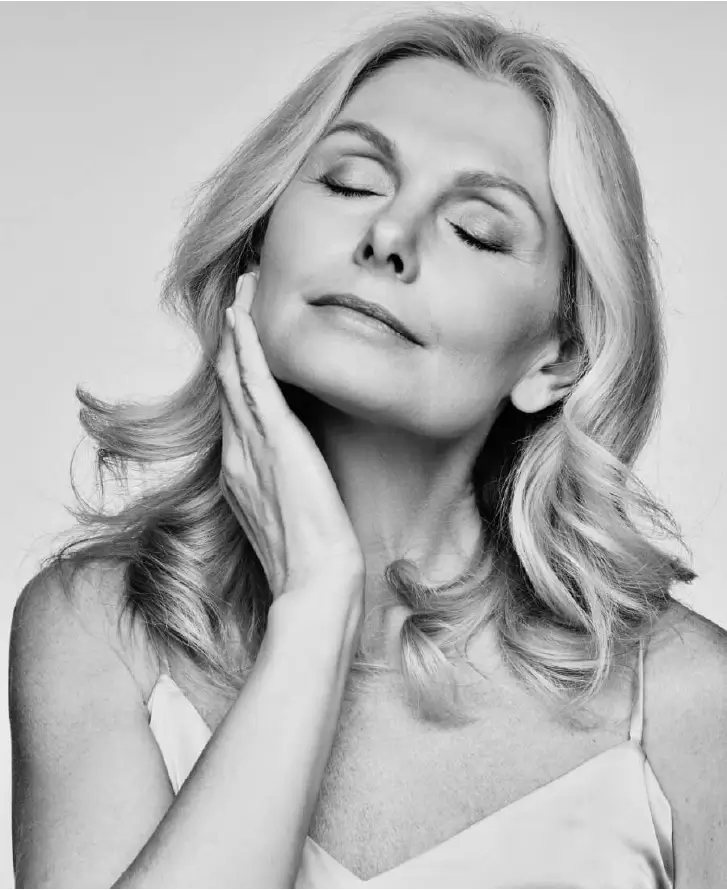
A medically supervised treatment
PRP is a medication prepared from your own blood. At Clinique Eden, it is administered by Dr. Stéphanie Malo-Gueret, after a consultation to ensure it is suitable for you.
- Consultation included in the treatment price
- 1 hour of access to the Spa included with your treatment
- A protocol defined with the doctor, adapted to your skin and your goals
The treatment
Autologous
PRP is prepared on the same day from a small amount of your blood, with no added products.
Concentrated platelets
Centrifugation concentrates the platelets, which release growth factors involved in tissue repair.
Performed by a doctor
The doctor performs the sampling, preparation and injection in her office during the same session.
Personalized protocol
The number of sessions and the protocol are defined during a consultation.
Progressive results
The effects take place over several weeks and vary from person to person; they are discussed with you during a consultation.
Treated areas
Face
Skin quality, radiance, fine lines: the most frequent indication.
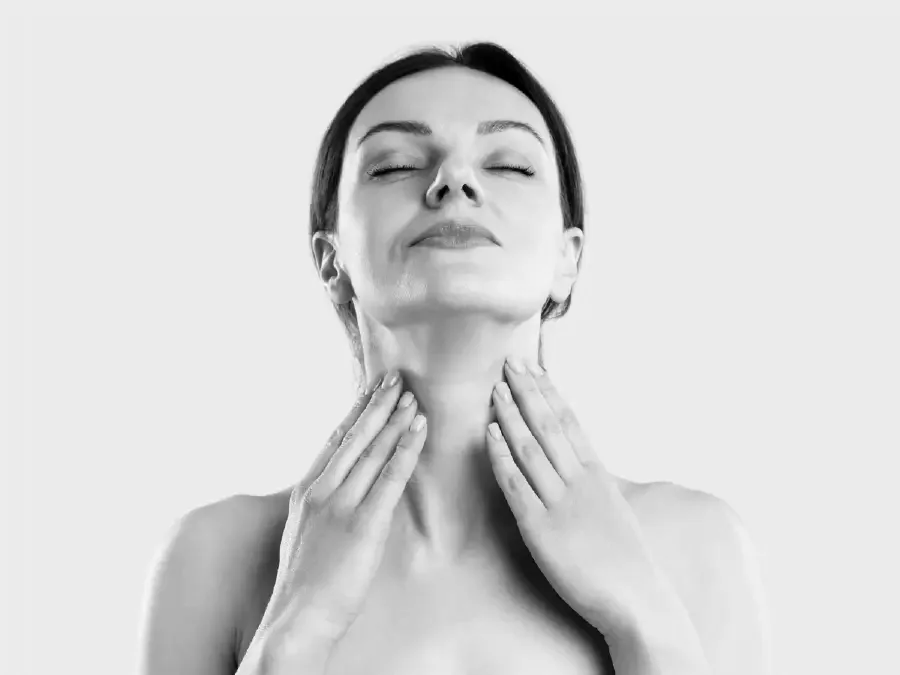
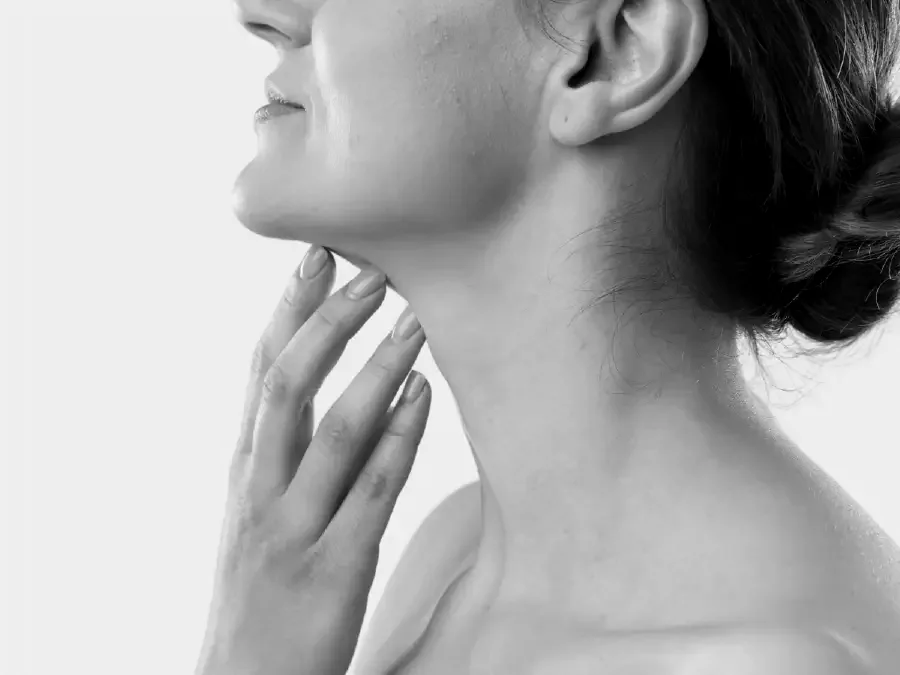
Neck & décolletage
Areas with thin skin, where the first signs of aging become apparent.
Scalp
In some cases of hair loss, after medical evaluation of the cause.
Mains
The thin skin on the backs of the hands.
Scars & acne marks
Certain acne scars and skin texture irregularities, under medical supervision.
Process
The course of a session
Approximately 45 to 60 minutes, in the office.
Consultation
The doctor assesses your skin, your expectations and any contraindications.
Blood Lance
A small amount of blood is taken, as with a blood test.
Prepare in advance
The blood is centrifuged to concentrate the platelets in the plasma.
Injection
PRP is injected into the defined areas; an anesthetic cream may be applied beforehand.
PRP is not recommended in cases of
- Active autoimmune disease
- Blood clotting disorder
- Ongoing skin infection
- Pregnancy or breastfeeding
- Anticoagulant treatment (approval of the treating physician required)
- Non-exhaustive list — verified during consultation
The PRP can be considered for
- A dull or tired complexion
- Fine lines and loss of firmness
- Thin or dehydrated skin
- Acne marks or uneven skin texture
- Some hair loss, after evaluation
- Always after a medical consultation
The principle
How does PRP work?
Platelet-rich plasma is obtained by centrifuging a small amount of your blood: the platelets are concentrated in the plasma, while the red blood cells are separated. The platelets release growth factors (PDGF, TGF-β, VEGF, EGF, etc.) that participate in the natural mechanisms of tissue repair and collagen production.
Once injected into the dermis, this plasma acts as a signal for skin cells, particularly fibroblasts. The concentration level, the device used, and the protocol will be explained to you during your consultation with the doctor.
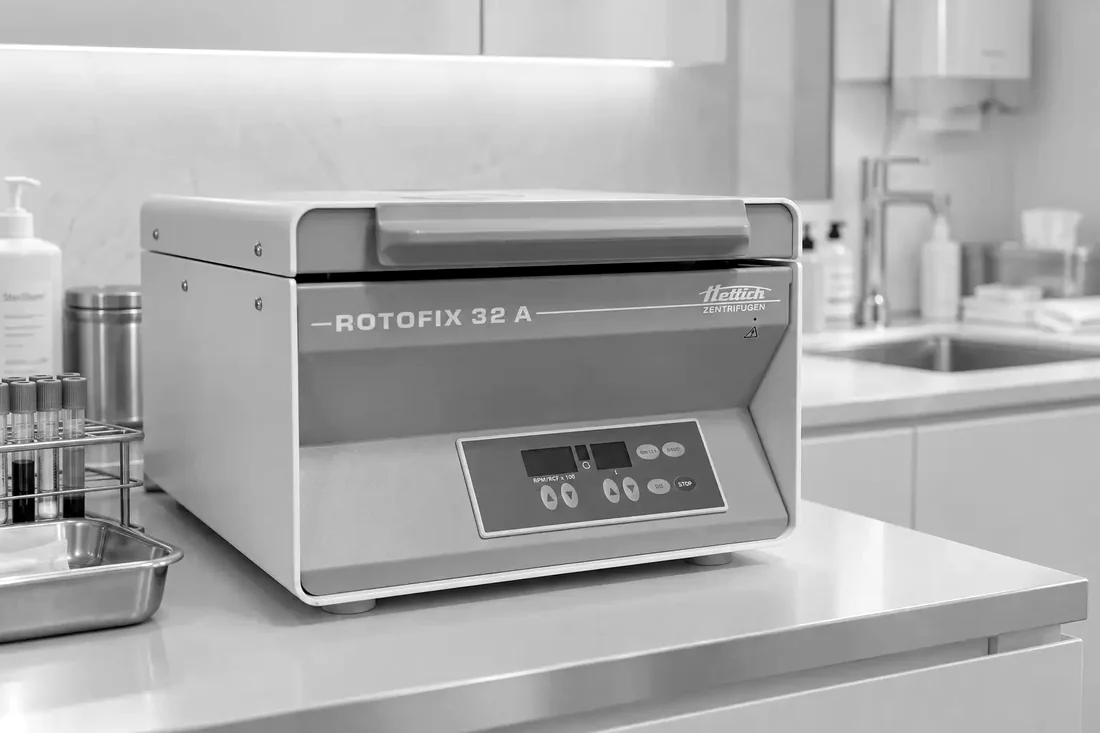
Illustration — PRP preparation centrifuge.
PRP is reserved after a medical consultation — choose “Consultation”.
Medical supervision
Content reviewed by Dr. Stéphanie Malo-Gueret, physician at Clinique Eden Suisse SA. Since PRP is a medication prepared from your own blood, its preparation and injection are reserved for doctors. Discover the doctor →
F.A.Q
FAQ PRP
Is PRP effective in improving skin quality?
PRP is used in cosmetic medicine to improve skin quality: texture, radiance, and firmness. The extent and duration of the effects vary from person to person and cannot be guaranteed. During your consultation, the doctor will explain what you can reasonably expect in your specific case.
Can PRP help with hair loss?
Scalp PRP may be offered for certain cases of mild to moderate hair loss. Hair loss can have many causes: it is first assessed during a consultation, and PRP is only offered if it is deemed appropriate. It does not replace a diagnosis or, if necessary, medical treatment of the underlying cause.
What is the difference between PRP, microneedling and mesotherapy?
These are three distinct techniques. Microneedling mechanically stimulates the skin through micro-perforations; mesotherapy delivers active ingredients such as vitamins or hyaluronic acid; and PRP provides growth factors contained in your own plasma. Depending on the desired outcome, they can be offered separately or in combination.
Is PRP suitable for sensitive skin?
PRP is prepared using your own blood, so the risk of an allergic reaction to the product itself is low. Local reactions are still possible—redness, swelling, small bruises at the injection site—and generally disappear within a few days. Your skin's tolerance will be assessed during a consultation.
What does PRP offer compared to cosmetics?
Cosmetics act on the surface of the skin; PRP is injected into the dermis, where fibroblasts are located. The two approaches are not comparable and can be complementary: appropriate cosmetic care remains beneficial before and after treatment.
Can PRP be considered for dark circles, scars or spots?
PRP may be recommended for certain types of dark circles (pigmented or hollow), some acne scars, and uneven skin tone. The appropriate treatment depends on the nature of the problem: it is assessed during a consultation, and another treatment may be more suitable.
Is PRP painful?
PRP is generally well tolerated. The sensation is similar to small pricks at the time of injection; an anesthetic cream can be applied beforehand for added comfort. Temporary sensitivity of the area is possible in the hours that follow.
Should you prepare before a PRP session?
It is recommended to stay well hydrated in the 48 hours preceding the session, and to avoid alcohol, anti-inflammatories, and intense exercise the day before. Specific instructions will be given to you during your consultation, depending on your individual situation.
What should be avoided after a PRP session?
For 24 to 48 hours, it's best to avoid intense exercise, excessive heat (sauna, steam room), direct sun exposure, and, depending on the area, makeup. Slight redness, swelling, or small bruises may appear; these usually disappear within a few days.
How long does a PRP session last?
A complete session lasts between 45 and 60 minutes: consultation, blood test, preparation of the PRP by centrifugation, then injections in the defined areas.
Can PRP be combined with other aesthetic medicine treatments?
Yes, when indicated. PRP improves skin quality and can complement other treatments that address different objectives. The doctor will advise you on the suitability, order, and spacing of treatments.
What are the contraindications to PRP?
PRP is not recommended, particularly in cases of active autoimmune disease, coagulation disorders, ongoing skin infections, pregnancy, or breastfeeding. Individuals taking anticoagulants must obtain approval from their doctor. This list is not exhaustive; contraindications are verified during a consultation.
How does PRP work at the cellular level?
Platelets release growth factors—PDGF, TGF-β, VEGF, EGF—which participate in fibroblast activation, microcirculation, and collagen production. These are natural tissue repair mechanisms that PRP stimulates locally.
Are the results of PRP natural?
PRP adds neither volume nor synthetic products: it does not alter facial features or expressions. The desired effect focuses on skin quality—radiance, texture, firmness—and stems from the reaction of your own tissues.
How long do the effects of PRP last?
The duration of the effects varies depending on the individual, the area treated, the protocol, and lifestyle; it generally lasts several months. A follow-up appointment may be offered; its frequency will be discussed during the consultation.
Is PRP suitable for mature skin?
PRP can be offered to mature skin, either alone or in conjunction with other treatments. The indication, the protocol, and realistic expectations are discussed during a consultation.
Which areas can be treated with PRP?
The face, neck, décolleté, hands, scalp and certain scar areas. The area and protocol are defined during a consultation.
FIND US
FIND US
LAUSANNE
20 minutes by car and 30 minutes by train/bus
VEVEY
10 minutes by car and 15 minutes by train/bus
MONTREUX
15 minutes by car and 30 minutes by train/bus
GENEVA
55 minutes by car and 75 minutes by train/bus
COP
30 minutes by car and 75 minutes by train/bus
MARTIGNY
35 minutes by car and 75 minutes by train/bus